
Germany Country Program
The International Rescue Committee (IRC) in Germany works to strengthen prevention, protection, and response to human trafficking by improving the early identification of victims, building the capacity of frontline actors and institutions, and supporting survivors through trauma-informed, victim-centred assistance. As the European Union’s most populous country and one of its largest labour markets, Germany is a major destination and transit country for trafficking; IRC’s programs focus on refugees, asylum-seekers, migrant workers, and other vulnerable populations at risk of sexual and labour exploitation, forced criminality, and other forms of trafficking, in refugee accommodation, in high-risk labour sectors, and online.
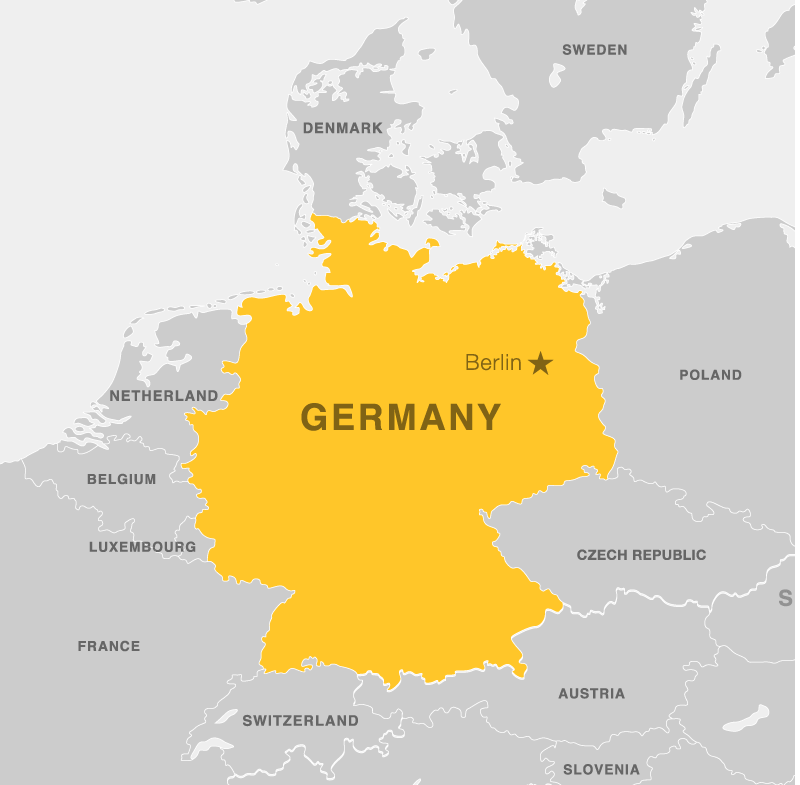
Germany is the most populous country in the European Union, with approximately 84 million inhabitants, and plays a central political and economic role in Europe. Located at the crossroads of Western, Central, and Eastern Europe, Germany has extensive land borders and strong transport links, making it a key destination and transit country for migration and labor mobility.
As a major economic hub with a large labor market, Germany attracts migrants, asylum-seekers, and workers from across Europe and beyond. While this creates opportunities, it also exposes certain groups to heightened risks of exploitation, particularly in informal or low-wage sectors. Germany is primarily a destination country for human trafficking, though it also functions as a transit country within Europe.
Human trafficking in Germany affects both foreign and German nationals. National identification data indicate that a substantial share of identified victims are German nationals, including individuals who were recruited and exploited entirely within the country. This highlights that human trafficking is not exclusively linked to migration or mobility,
However, these figures do not necessarily reflect the overall prevalence of trafficking among different population groups. Foreign nationals, particularly mobile EU citizens, asylum-seekers, undocumented migrants, and other third-country nationals, may face structural barriers to identification and referral, which can contribute to under-detection.
Sexual exploitation remains one of the most frequently identified forms of trafficking, particularly affecting women and girls. Victims are often recruited through deception, false job offers, emotional manipulation, or exploitative relationships.
Labor trafficking is also a significant concern, especially in sectors such as construction, meat processing, agriculture, logistics, hospitality, domestic work, and cleaning services. Undocumented migrants, EU mobile workers, asylum-seekers, and people with limited German language skills are particularly vulnerable to exploitation due to dependency on employers, debt, or insecure legal status.
Children are trafficked for sexual exploitation, forced begging, and forced criminality. Unaccompanied and separated children face elevated risks. Digital technologies and online platforms are increasingly used by traffickers for recruitment, control, and exploitation, including in cases of sexual exploitation and grooming.
Key Actors and Stakeholders
Government Institutions
- Federal Criminal Police Office (Bundeskriminalamt – BKA): Coordinates trafficking investigations at the federal level and supports international cooperation.
- State Criminal Police Offices (Landeskriminalämter): Lead investigations at the regional level.
- Federal Office for Migration and Refugees (BAMF): Plays a role in identifying vulnerabilities among asylum-seekers.
- Ministry for Family Affairs, Senior Citizens, Women and Youth (BMFSFJ): Supports victim protection policies and funding.
- Public Prosecutors’ Offices: Lead prosecutions of trafficking crimes.
Civil Society and NGOs
- KOK – German NGO Network against Trafficking in Human Beings: National coordination body for specialized counseling centers.
- ECPAT: Leading actor on child protection and the prevention of child trafficking, exploitation, and abuse, including awareness-raising, research, and professional capacity building.
- ARBEIT UND LEBEN: Provides prevention activities, training, counselling, and advocacy related to labour exploitation and labour trafficking, particularly affecting migrant workers.
- Berichterstattungsstelle Menschenhandel at the German Institute for Human Rights (DIMR): National Rapporteur-equivalent mechanism responsible for monitoring trends, collecting and analysing data, and reporting on Germany’s response to human trafficking
International and Regional Partners
- IOM, UNODC, and OSCE support research, training, and cross-border cooperation.
- EU institutions provide policy guidance and funding.
- Council of Europe’s GRETA monitors Germany’s implementation of the Anti-Trafficking Convention.
Coordination between federal authorities, state-level institutions, and civil society actors is supported through national working groups and referral mechanisms. Due to Germany’s federal structure, however, key aspects of identification, referral, victim assistance, and inter-agency cooperation are regulated and implemented at Länder level. Federal states have developed different procedures, cooperation mechanisms, and referral structures, and in some cases their own approaches to victim identification. As a result, access to support services and pathways to protection may vary across the country. Ensuring consistent identification standards and victim-centred responses therefore remains an ongoing challenge.
In addition, Germany adopted its first National Action Plan to Prevent and Combat Trafficking in Human Beings and Protect Trafficked Persons in late 2024, with publication and implementation rolling out in 2025. The Action Plan contains 126 measures across prevention, protection, prosecution, cooperation, and research, and provides the first comprehensive national strategic framework for Germany’s anti-trafficking response. As implementation has only recently begun, its impact on legislation, institutional cooperation, victim identification, and support structures remains to be seen. The sector is therefore likely to continue evolving in the coming years as federal and state-level actors translate the Action Plan into practice.
Our Work in Germany
The IRC in Germany works to close the gaps that leave migrants, asylum-seekers, refugees, and other vulnerable groups exposed to trafficking and exploitation. The programme concentrates on the points where people are most often missed by existing systems — in refugee accommodation, in informal and low-wage labour sectors, and online — and builds the capacity of frontline workers and institutions to identify, protect, and refer victims earlier and more safely.
The programme is grounded in survivor-centred, trauma-informed, rights-based, and safeguarding approaches. IRC prioritises the safety, dignity, agency, and informed consent of survivors, recognising that recovery and protection require more than identification alone. Particular attention is given to cultural responsiveness, equity and inclusion, and the meaningful participation of people with lived experience in the design and delivery of activities.
Rather than operating as a specialised victim support service itself, IRC works closely with specialised counselling centres and survivor support organisations across Germany. These partnerships ensure that presumed and identified victims can access expert assistance while enabling IRC to focus on strengthening systems, improving referral pathways, and addressing structural protection gaps.
A significant part of the programme’s work takes place at the conceptual and strategic level. IRC develops and tests innovative approaches to prevention, identification, self-identification, digital outreach, and inter-agency cooperation; produces practical tools, training materials, research, and policy recommendations; and contributes to national and European discussions on strengthening anti-trafficking responses. Through this work, the programme aims not only to support individual projects but also to contribute to sustainable improvements across the wider anti-trafficking sector.
Much of this work is carried out in partnership with specialised German NGOs and, through EU-funded transnational projects, with organisations across Greece, Italy, Spain, and the Netherlands. The programme also seeks to strengthen continuity of care and sustainable referral pathways so that survivors can access support, protection, and longer-term opportunities for recovery and social inclusion.
Projects Implemented
More Projects Implemented
REACH – Resilience through Enhanced Access to Comprehensive Help
Lichtblicke – Together Against Human Trafficking and Gender-Based Violence
Safety Net – Protection from Exploitation and Human Trafficking
DIRECT – Developing Coordination with Migrants to Enhance Inclusion of Trafficked Persons
Key Achievements
Resources and Key Documents
Country Overview
Germany is the most populous country in the European Union, with approximately 84 million inhabitants, and plays a central political and economic role in Europe. Located at the crossroads of Western, Central, and Eastern Europe, Germany has extensive land borders and strong transport links, making it a key destination and transit country for migration and labor mobility.
As a major economic hub with a large labor market, Germany attracts migrants, asylum-seekers, and workers from across Europe and beyond. While this creates opportunities, it also exposes certain groups to heightened risks of exploitation, particularly in informal or low-wage sectors. Germany is primarily a destination country for human trafficking, though it also functions as a transit country within Europe.
Quick Facts
- Role in trafficking: Destination and transit country
- Main forms: Sexual exploitation, labor exploitation, forced begging, forced criminality
- Migration context: Large migrant workforce; significant number of asylum-seekers and refugees